Λ
8 Best Stretches for Neck Tension That Feel Good
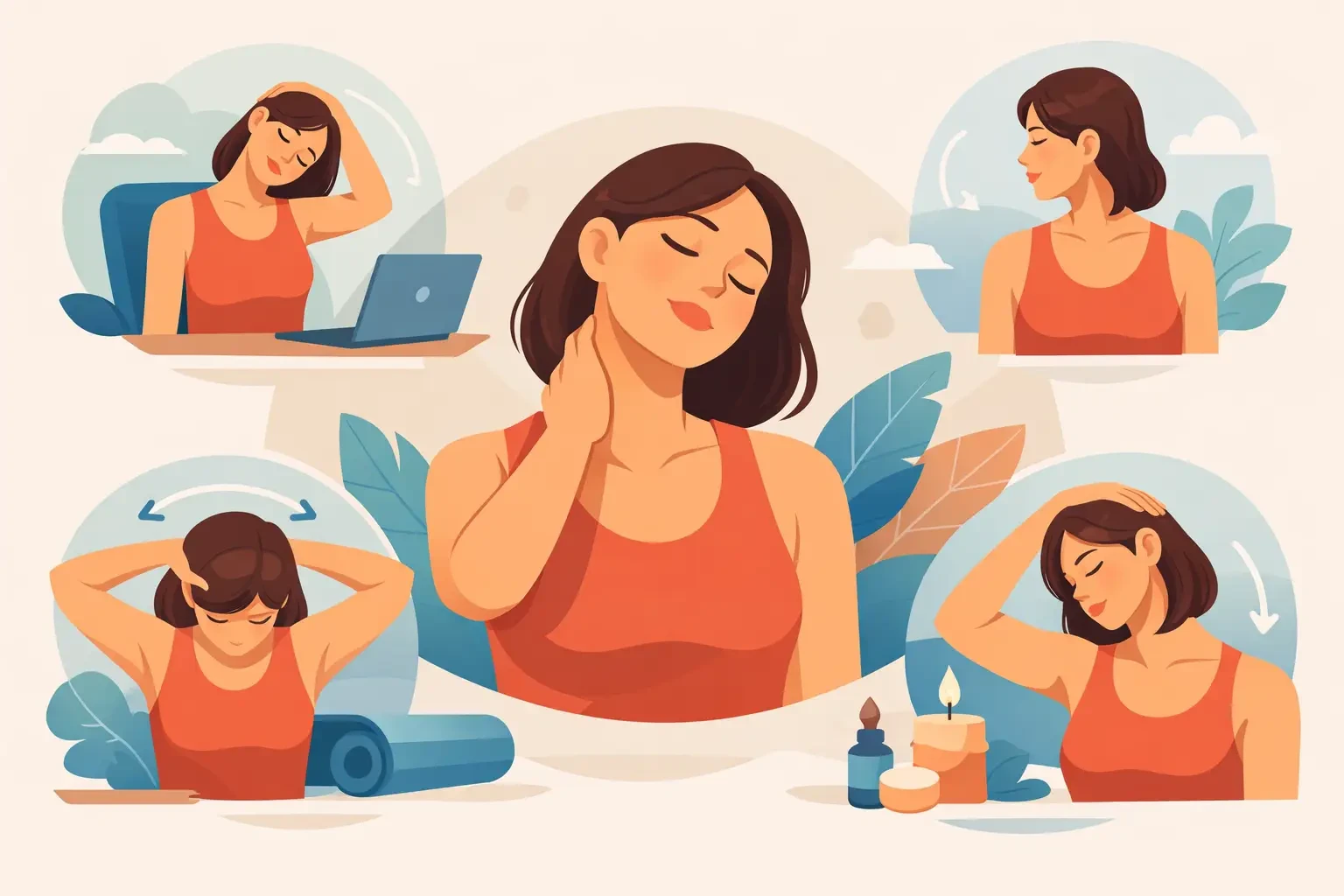
That tight, heavy feeling at the base of your skull after a long laptop day is not just a neck problem. It can involve your shoulders creeping upward, your upper back getting stiff, your breathing becoming shallow, and your nervous system staying on high alert. The best stretches for neck tension can offer a welcome reset, especially when you approach them gently instead of trying to force a dramatic crack or deep pull.
Neck tension is common for working professionals, busy parents, gym regulars, and anyone who spends time looking down at a phone. The good news: a few intentional minutes of movement can help restore comfort and remind your body that it does not need to hold everything so tightly.
Why neck tension needs more than a neck stretch
Your neck is a small but hardworking bridge between your head, shoulders, and spine. When the upper back is rounded, the jaw is clenched, or the shoulders are braced through a stressful day, the neck muscles often step in to compensate. That is why rubbing the sore spot may feel lovely for a few minutes but not fully change the pattern.
A helpful stretch routine includes slow breathing, movement through the upper back, and attention to the chest and shoulders. Think of it as creating a little more room for your body to find alignment, not punishing it into perfect posture. No one needs to sit like a statue all day. Your body usually benefits more from changing positions often.
Best stretches for neck tension at home or work
Move slowly through these stretches once or twice a day, or whenever your shoulders start auditioning for earrings. You should feel a mild to moderate stretch, never sharp pain, tingling, numbness, dizziness, or a sensation that something is not right. Breathe normally, and let your exhale be a touch longer than your inhale.
1. Chin tucks for a forward-head reset
Sit or stand tall with your shoulders relaxed. Keep your eyes level and gently glide your head straight backward, as if you are making a soft double chin. Do not tip your chin down or look at the floor. Hold for three to five seconds, then release.
Repeat eight to 10 times. This small movement strengthens awareness of the deep muscles that support the neck and can feel especially good after looking at a screen. The movement is subtle. Bigger is not better here.
2. Upper trapezius stretch for shoulder-to-neck tightness
Sit on one hand or hold the side of your chair to anchor the shoulder. Let the opposite ear drift toward the opposite shoulder, keeping your face pointed forward. You may add the lightest touch of your free hand on top of your head, but do not pull.
Hold for 20 to 30 seconds, then switch sides. This stretch targets the broad muscle running from the top of your shoulder into your neck. If one side feels noticeably tighter, give it an extra gentle round rather than yanking harder.
3. Levator scapulae stretch for the “knot” near the shoulder blade
The levator scapulae is a frequent culprit when you feel a stubborn ache where the neck meets the top inside corner of the shoulder blade. Start seated with one hand holding your chair. Turn your head about 45 degrees away from that anchored arm, then angle your chin gently toward your armpit.
Hold for 20 to 30 seconds before changing sides. Imagine lengthening the back of your neck rather than collapsing your chest. This one can feel surprisingly specific, which is why it is a favorite for people carrying a backpack, driving often, or spending long hours at a computer.
4. Neck rotations for comfortable range of motion
Sit upright and slowly turn your head to look over one shoulder. Pause before the point of strain, take a breath, and return to center. Repeat on the other side.
Do five to eight slow repetitions per side. Keep your shoulders quiet instead of allowing your whole torso to twist. If rotation feels pinchy, reduce the range. A smaller, comfortable motion teaches your body safety much better than trying to win a flexibility contest.
5. Chest doorway stretch to give the neck a break
Tight chest muscles can round the shoulders forward and ask the neck to work overtime. Stand in a doorway with one forearm resting on the frame, elbow roughly at shoulder height. Step forward gently until you feel an opening across the chest and front of the shoulder.
Hold for 20 to 30 seconds, then repeat on the other side. If your shoulder is sensitive, lower the arm position and take a smaller step. This is not technically a neck stretch, but it often makes the neck stretches work better because the front of the body is no longer tugging the shoulders forward.
6. Thread the needle for upper-back mobility
Begin on hands and knees. Slide your right arm underneath your left arm with your palm facing up, allowing your right shoulder and the side of your head to rest lightly on the floor or a cushion. Keep your hips stacked over your knees as comfortably as you can.
Breathe into the back of your ribs for three to five breaths, then switch sides. This gentle rotation helps address stiffness through the upper back, an area that has a big influence on how free your neck feels. If being on the floor is not practical, try a seated twist instead.
7. Shoulder rolls with slow breathing
Sometimes the simplest movement is the one you will actually do between meetings. Inhale as you lift your shoulders toward your ears. Exhale as you roll them back and down. Repeat eight to 10 times, then reverse the direction for a few repetitions.
Pairing the movement with your breath matters. Slow exhalations can help reduce the bracing response that keeps the shoulders elevated. Consider this a mini reset, not an exercise you need to overthink.
8. Gentle neck flexion for the back of the neck
Place your hands behind your head, fingers interlaced only if that feels comfortable. Nod your chin slightly, then allow your head to bow forward a few inches. Your hands are there for support, not force.
Hold for 15 to 20 seconds while keeping the shoulders relaxed. Skip this stretch if it causes symptoms into the arms or aggravates a headache. For some people, especially those with a very forward-head posture, chin tucks and upper-back movement are a better starting point.
Make your stretch routine actually stick
A five-minute routine done consistently beats a 30-minute session you only do when the tension becomes unbearable. Try chin tucks, shoulder rolls, one side of the upper trapezius stretch, then the other side, followed by a doorway stretch. That is enough to interrupt a long stretch of sitting without turning your workday into a wellness production.
Your setup also matters. Raise your screen so your eyes are not constantly angled down, bring frequently used items within easy reach, and use a headset rather than pinning your phone between your ear and shoulder. At the gym, balance chest-focused workouts with pulling movements and upper-back strength work. Stretching may bring relief, but strength and daily movement help your body keep that relief.
If stress is a major contributor, add one small calming cue before you begin: unclench your jaw, relax your tongue from the roof of your mouth, and take three slow breaths. Neck tension is not always about anatomy alone. It can be your body's very understandable response to doing too much for too long.
When stretching is not the right next step
Stretching is not a substitute for a proper evaluation when symptoms are persistent, severe, or changing. Seek prompt medical care for neck pain after an accident or fall, sudden severe headache, fever with neck stiffness, new weakness, numbness, tingling, loss of coordination, or pain that travels strongly into an arm.
For recurring stiffness without those warning signs, personalized care can help identify what is feeding the pattern. At Align, chiropractic care, physiotherapy, acupuncture, cupping, and lifestyle guidance can be coordinated around your movement, recovery, stress, and daily habits instead of treating your neck as an isolated trouble spot.
Your neck does not need a harsh fix. Give it a few calm minutes, move often, and let comfort build one gentle repetition at a time.
Find your next step at ALIGN
Our Frisco team can help you explore care that fits your needs. Request an appointment or explore our services.
This article provides general information and does not replace individualized medical advice.
← Back to all articles