Λ
Forward Head Posture Correction Guide for Relief
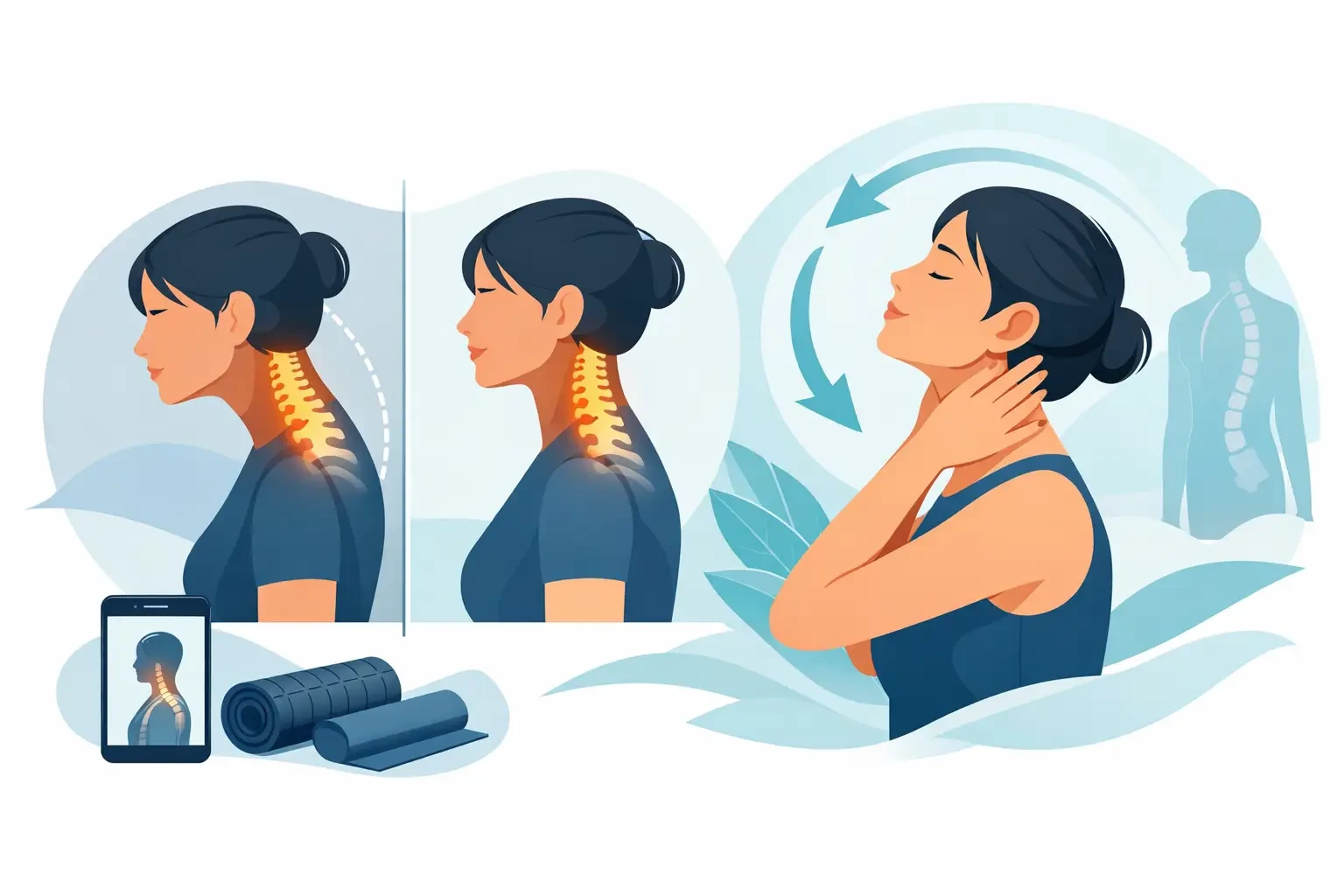
Your neck was not designed to spend eight hours reaching toward a laptop, then another hour curled over a phone. When your head gradually settles in front of your shoulders, the strain can show up as tight traps, headaches, jaw tension, a stiff upper back, or that stubborn knot at the base of the neck.
This forward head posture correction guide is about more than reminding yourself to “sit up straight.” Lasting change comes from helping your body feel safe, strong, and mobile in a better position - then making that position easier to return to throughout a real, busy day.
What Forward Head Posture Actually Means
Forward head posture happens when the head rests ahead of the shoulders instead of stacking more naturally over the rib cage and spine. It is common, especially among desk workers, drivers, parents, students, and anyone who spends a lot of time looking down. It is also not a character flaw, and it does not mean your body is permanently “out of alignment.”
Your posture changes constantly. The concern is not a single moment of looking at your phone. It is the combination of repeated positions, limited movement variety, muscle fatigue, stress, and sometimes an old injury that makes one position feel like home.
When the head stays forward for long stretches, the muscles at the front of the neck and chest may become guarded or shortened, while the deep neck stabilizers and upper-back muscles may not be doing their share. The shoulders can round, the upper back may become less mobile, and the jaw can join the party too. Cute? No. Changeable? Usually, yes.
A Forward Head Posture Correction Guide That Starts Small
The goal is not to force your chin back all day. Overcorrecting can create new tension, especially if you clench your jaw, flatten your neck aggressively, or brace through your shoulders. Think “gently stacked” rather than “military straight.”
Start by noticing your baseline. From the side, are your ears consistently ahead of your shoulders? Do you feel neck tension after computer work? Do you struggle to look up, turn your head, or take a full breath without lifting your shoulders? These clues can help you see where support is needed.
Reset your head and rib cage
Try this standing against a wall or seated upright with your feet supported. Let your ribs soften instead of flaring forward. Relax your shoulders away from your ears. Then glide your head straight back slightly, as if you are making a very subtle double chin. Keep your eyes level and avoid tipping your head down.
Hold for a slow breath or two, then release. Repeat five to eight times. You should feel a gentle engagement deep in the front of the neck, not pinching, dizziness, or sharp pain. A smaller motion is often the smarter motion.
Give your upper back some movement
A forward head is rarely only a neck issue. If your upper back is stiff, your neck often has to work overtime to keep your gaze forward. Add a few upper-back extensions during the day: sit tall, place your hands behind your head without pulling on the neck, and gently lift your chest as you breathe. Keep the movement comfortable and let your shoulders stay soft.
You can also place a rolled towel across the back of a chair at mid-back level and lean over it gently. This is not about chasing a dramatic stretch. It is about reminding your thoracic spine that it can move.
Build support between your shoulder blades
The muscles around the shoulder blades help create a steadier base for the neck. A simple wall exercise can help. Stand facing a wall with your forearms resting on it. Lightly press your forearms into the wall and slide them upward only as far as you can without shrugging or arching your low back.
Try two sets of six to 10 controlled repetitions a few times each week. If your shoulder hurts, reduce the range or skip it until you can get individualized guidance. The best exercise is not the fanciest one. It is the one you can perform comfortably, consistently, and with good control.
Loosen what is doing too much
Gentle chest opening can make it easier for the shoulders to rest back without force. Stand in a doorway with one forearm on the frame, step through slightly, and breathe into the front of the chest. Keep your ribs from popping forward. Hold for 20 to 30 seconds per side.
If the front of your neck feels tight, resist the urge to crank it into a big stretch. The neck is sensitive, and aggressive stretching can make protective tension worse. Slow breathing, upper-back mobility, and a lighter chin glide are often more useful starting points.
Your Desk Setup Matters, but It Is Not Magic
An ergonomic setup can reduce unnecessary strain, but no chair can save a body that never gets a movement break. Aim to bring your screen closer to eye level so you are not repeatedly looking down. Keep your keyboard and mouse close enough that you do not reach with your shoulders. Support your feet, and choose a chair position that lets your hips and knees feel comfortable.
Laptop users have an extra challenge. If you work on one for hours, raising the screen and using a separate keyboard and mouse can make a meaningful difference. For occasional use, perfection is not required. For daily work, those small adjustments add up.
More important than finding one flawless posture is changing positions regularly. Set a realistic cue every 30 to 60 minutes: stand up, walk to refill water, roll your shoulders, take five slow breaths, or do a few gentle head glides. Your body likes variety much more than it likes being held still.
Do Not Forget the Phone, Stress, and Sleep
Phone posture is sneaky because it happens in small pockets of time that become a lot of time. Bring the phone closer to eye level when possible, support the arm holding it, and switch hands. You do not need to be perfect while texting your best friend. You just want fewer long, folded-over sessions.
Stress can also make forward head posture feel more persistent. When the nervous system is on high alert, many people unconsciously elevate the shoulders, tighten the jaw, and brace through the neck. A few minutes of slower breathing, a walk outdoors, or a recovery-focused treatment can help your body move out of that guarded pattern.
Sleep deserves a quick check too. A pillow that pushes the head far forward or lets it drop too far back can contribute to morning stiffness. Side sleepers generally do well with enough pillow height to keep the neck level with the rest of the spine. Back sleepers may prefer a lower, supportive pillow. The right choice depends on your body, mattress, sleep position, and symptoms.
When Personalized Care Is a Better Next Step
Home habits can be powerful, but posture concerns are not always simple. A previous whiplash injury, shoulder issue, jaw clenching, chronic headaches, scoliosis, nerve irritation, or pain that keeps returning may call for a more individualized plan.
At Align, chiropractic care, physiotherapy, acupuncture, cupping, and myofunctional therapy can be coordinated based on what your body needs. Hands-on care may help address joint restriction and muscle tension, while guided movement builds the stability needed to carry those changes into daily life. If stress is feeding the tension cycle, nervous-system support and recovery practices matter too.
Seek prompt medical evaluation for new severe neck pain after a fall or accident, weakness, numbness or tingling that is worsening, changes in balance, loss of coordination, fever, or a severe unusual headache. Posture work is for gradual improvement, not for pushing through warning signs.
Your neck does not need punishment, and your posture does not need perfection. Give your body a little more movement, a little more support, and a little less time stuck in one shape. Those small, kind resets are often where sustainable alignment begins.
Find your next step at ALIGN
Our Frisco team can help you explore care that fits your needs. Request an appointment or explore our services.
This article provides general information and does not replace individualized medical advice.
← Back to all articles