Λ
A Guide to Spinal Health for Everyday Life
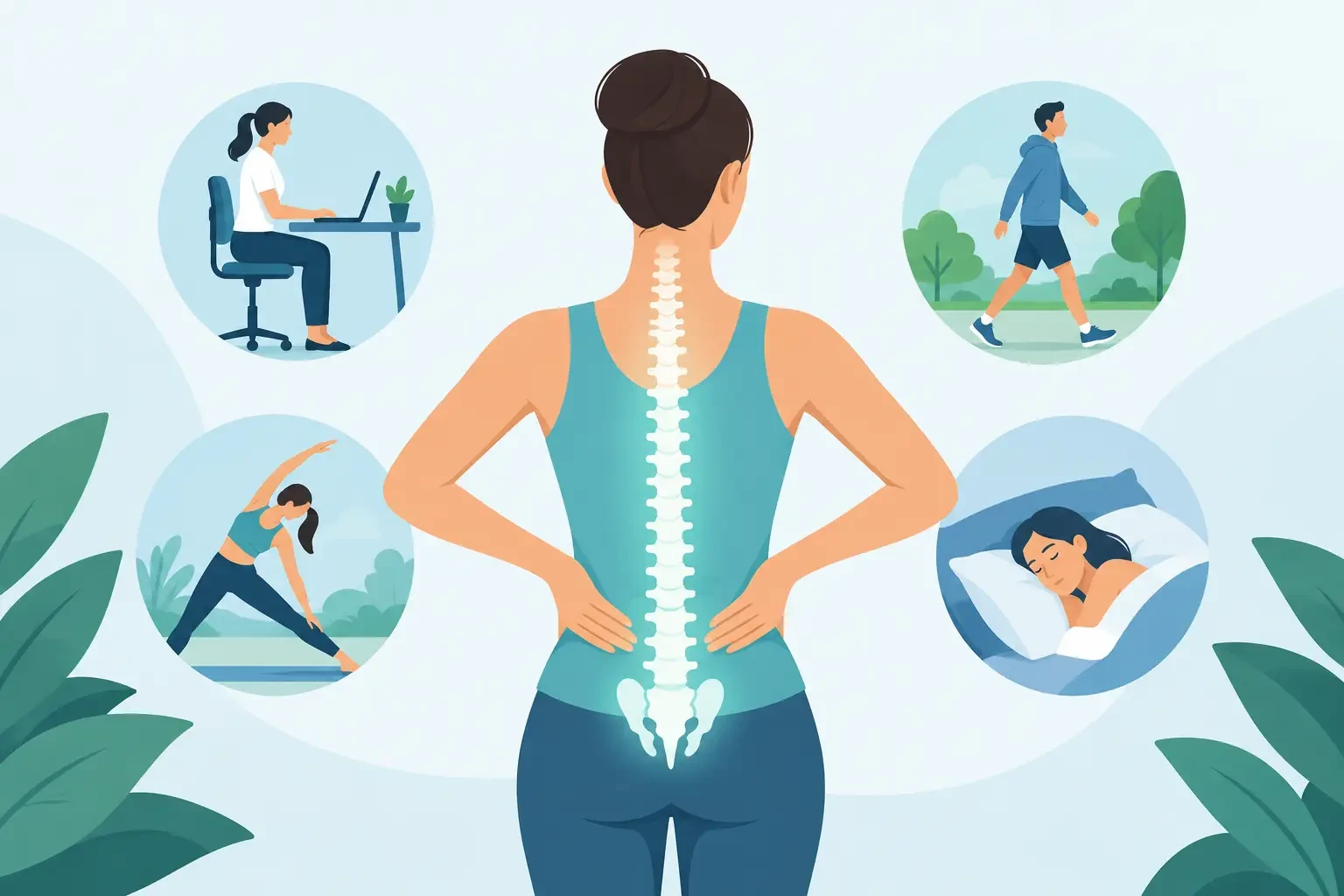
Your spine works overtime before your first coffee. It supports you while you sleep, helps you turn toward the kids in the back seat, steadies you through a workout, and absorbs the not-so-glamorous effects of laptop posture and long Texas commutes. A guide to spinal health should not make you feel like you need a perfect posture or a brand-new lifestyle. It should help you notice what your body needs and build supportive habits that fit real life.
Spinal wellness is less about holding yourself stiffly upright and more about having the comfort, strength, mobility, and nervous-system support to move through your day with confidence. A little more ease reaching overhead, fewer cranky neck mornings, and better recovery after activity can add up to a big quality-of-life shift.
What spinal health really means
Your spine is not just a stack of bones. It is a dynamic system of vertebrae, discs, joints, muscles, ligaments, and nerves that helps your whole body communicate and move. When one part is irritated, overloaded, or not moving well, you may feel it somewhere else: tension between the shoulder blades, headaches that start in the neck, low-back tightness after sitting, or hips that seem permanently grumpy.
Good spinal health does not mean you will never have soreness. Bodies are adaptable, and occasional stiffness after gardening, travel, lifting, or an ambitious workout is normal. The goal is to improve your capacity to move, recover, and respond to daily stress without feeling held back by persistent discomfort.
That is also why a whole-body approach matters. Spinal alignment can be influenced by sleep, stress, training load, desk setup, hydration, breathing patterns, old injuries, and even how often you change positions during the day. Your body is not a collection of unrelated parts. It is a very chatty team.
A guide to spinal health starts with movement variety
There is no single "perfect" posture to maintain all day. The posture that tends to bother your body most is often the one you stay in too long. Slouching for ten minutes is not a crisis. Sitting in any position for three hours without moving can be.
Build small movement changes into the places where your day already happens. Stand during a call, take a two-minute walk between tasks, gently rotate your upper body before getting into the car, or switch from sitting to standing while answering emails. These mini resets can help reduce the sense that your neck, back, and hips are stuck in one setting.
Regular exercise supports spinal health too, but the best choice depends on your current capacity. Walking, strength training, Pilates, yoga, swimming, and mobility work can all be useful. If a movement repeatedly creates sharp pain, numbness, or worsening symptoms, pushing through is not a gold star moment. It is a cue to get individualized guidance.
Give your core and hips some love
Your core is much more than visible abs. It includes a coordinated group of muscles around the trunk, pelvis, diaphragm, and back that help you transfer force as you bend, carry, twist, and walk. Strong, well-coordinated hips also take some of the workload off the low back.
You do not need to turn every workout into a boot camp. Consistent, appropriately challenging movement usually beats occasional heroic efforts. A personalized physiotherapy plan can be especially helpful if you are returning to exercise after an injury, pregnancy, illness, or a long stretch of being less active.
Make your everyday setup work for you
A wellness-friendly workspace does not need to look like a spaceship. A few practical adjustments can make long workdays feel kinder to your spine. Place your screen around eye level, keep frequently used items within easy reach, and choose a chair setup that allows your feet to feel supported. If you use a laptop, an external keyboard or riser can reduce the habit of folding your neck toward the screen.
Then remember the part many ergonomic checklists skip: get up. Even a beautifully arranged desk cannot replace movement. Set a gentle reminder if you tend to get locked into focus mode.
Your sleep setup deserves the same curiosity. The ideal pillow and mattress vary from person to person, so there is no universal best pick. What matters is whether you wake up feeling reasonably supported rather than consistently twisted, numb, or achy. Side sleepers may appreciate a pillow between the knees, while back sleepers may find that a small pillow under the knees eases low-back tension. Experiment thoughtfully instead of assuming discomfort is just part of adulthood.
Stress can show up in your neck and back
Ever notice your shoulders slowly climbing toward your ears during a packed week? Stress does not cause every pain problem, but it can increase muscle tension, change breathing patterns, disrupt sleep, and make existing discomfort feel louder. Your nervous system and musculoskeletal system are always in conversation.
This is where restorative care can support more than sore muscles. Gentle chiropractic care may help address joint mobility and movement patterns. Acupuncture can be a calming option for people who want support for tension and overall well-being. Cupping may help some clients feel relief from muscular tightness, while soft-tissue work and guided recovery strategies can help the body settle after demanding seasons.
The right combination depends on your history, symptoms, preferences, and goals. Someone training for a race may need a different plan than a parent carrying a toddler, a professional with desk-related neck tension, or a client recovering after a flare-up. Personalized care is not extra. It is the point.
Know when discomfort needs more attention
Most minor aches improve with sensible activity changes, rest, and supportive care. Still, certain symptoms deserve prompt medical evaluation rather than a wait-and-see approach. Seek urgent care for back or neck pain accompanied by:
- New bowel or bladder changes
- Numbness in the groin or inner thighs
- Significant weakness in an arm or leg
- Fever, unexplained weight loss, or pain after major trauma
Persistent pain, recurring flare-ups, tingling, or symptoms that interfere with sleep, work, or movement are also good reasons to schedule a professional assessment. You do not have to wait until you are miserable to ask for help.
Build a plan you can actually keep
The most sustainable spinal-health routine is usually wonderfully unflashy. It might mean walking after lunch, strength training twice a week, taking movement breaks during your workday, improving sleep positioning, and getting hands-on care when tension or mobility restrictions start affecting your life.
At Align, care can bring chiropractic, acupuncture, cupping, physiotherapy, and lifestyle planning into one coordinated conversation. Rather than chasing every symptom separately, the focus is on what your body is asking for now and what will help you stay more resilient over time.
Be patient with the process. Your spine has adapted to years of habits, workload, stress, and movement patterns, so meaningful change is rarely about one dramatic adjustment or one perfectly executed stretch. It is built through small, supportive choices that help you feel more at home in your body - one easier breath, smoother bend, and more comfortable day at a time.
Find your next step at ALIGN
Our Frisco team can help you explore care that fits your needs. Request an appointment or explore our services.
This article provides general information and does not replace individualized medical advice.
← Back to all articles