Λ
Hip Pain Relief That Starts With Better Movement
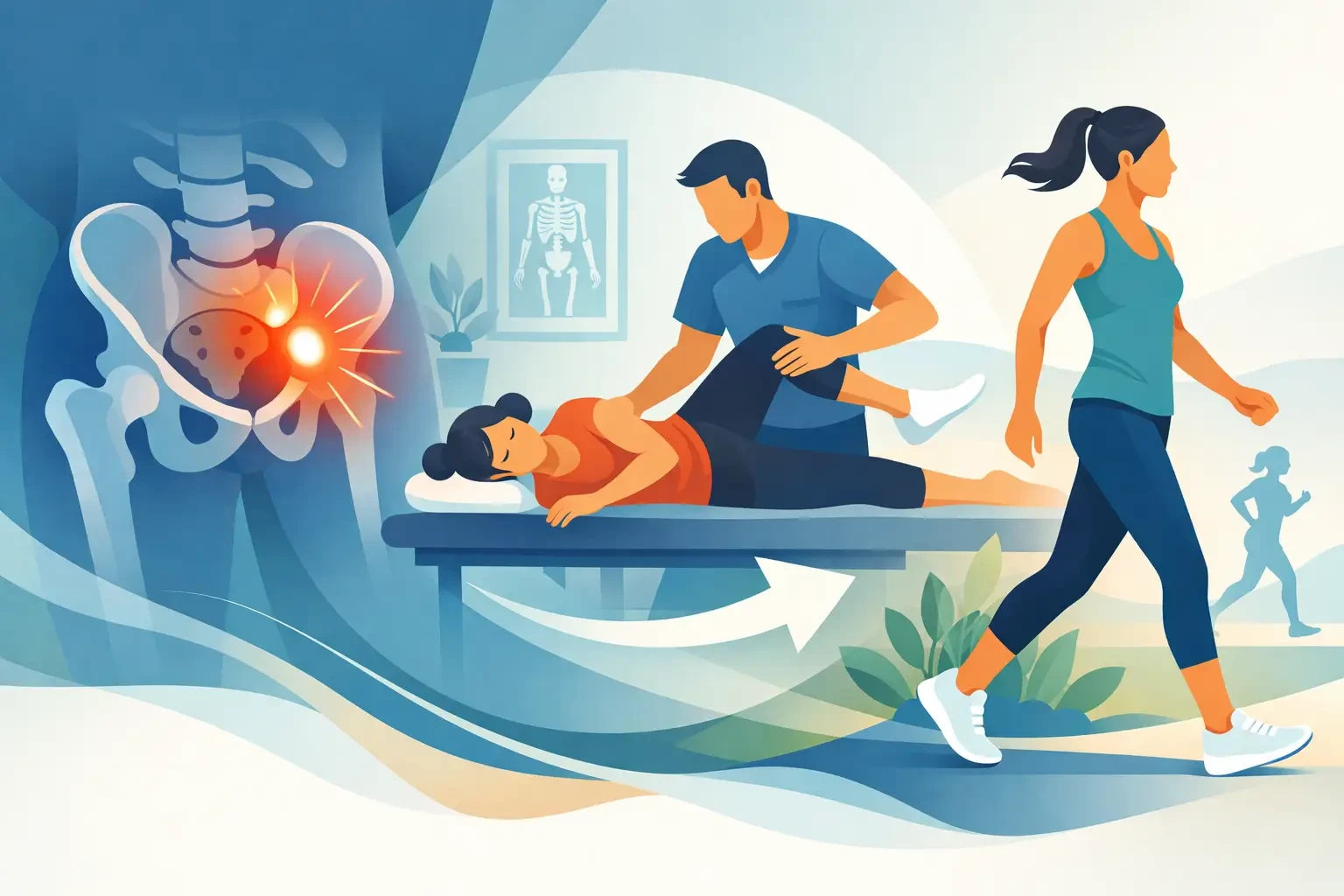
A hip that complains when you stand up from your desk, climb stairs, roll over in bed, or step out of the car can make everyday life feel strangely small. Hip pain relief is not always about chasing one sore spot. Your hip works in constant conversation with your low back, pelvis, knees, feet, core, and nervous system. When one part is under strain, the whole conversation can get a little spicy.
That is why a whole-body approach can be so helpful. The goal is not simply to quiet pain for the afternoon. It is to understand what may be loading the hip, restore comfortable movement where possible, and create habits that support your body long after the appointment ends.
Why Hip Pain Can Feel So Stubborn
The hip is a deep, powerful ball-and-socket joint built to carry a lot of life. It helps you walk, squat, run, sit, balance, and change direction. Because so many muscles and joints influence it, discomfort can show up in several places: at the front of the hip or groin, along the outside of the hip, in the glute area, or even as pain that seems to travel down the thigh.
Sometimes the issue is obvious, such as a hard workout, a fall, or a sudden increase in running mileage. Other times, it builds quietly. Hours of sitting, always carrying a toddler on the same side, standing with weight shifted into one hip, weak or tired glute muscles, an old ankle injury, and low-back stiffness can all change how your body distributes force.
Pain location offers clues, but it does not tell the entire story. Outer-hip tenderness may involve irritated tissues around the hip, while front-of-hip pinching may be affected by joint position, muscle tension, or movement patterns. That is why a thoughtful assessment matters more than guessing based on a single stretch from social media.
Hip Pain Relief Begins With the Pattern, Not Just the Pain
A personalized care plan starts by looking at how your body moves and what your normal life asks of it. Is the pain worse after long meetings, after pickleball, or first thing in the morning? Does walking help, or does it feel worse? Are you dealing with low-back tension, a limp, knee discomfort, poor sleep, or stress that keeps your muscles on high alert?
At Align, care can bring together hands-on treatment and practical movement support rather than treating your hip like it exists in a tiny bubble. Chiropractic care may help address joint restriction and spinal or pelvic mechanics that are contributing to uneven loading. Physiotherapy can focus on mobility, strength, control, and a realistic return to the activities you love.
For some people, acupuncture is a calming addition when persistent tension, stress, or pain sensitivity is part of the picture. Cupping may also be used to support soft-tissue mobility and post-workout recovery. No single service is a magic wand, cute as that would be. The best combination depends on your symptoms, health history, movement goals, and how your body responds over time.
Mobility without forcing the stretch
When a hip feels tight, the instinct is often to stretch it aggressively. But tightness is not always a sign that a muscle needs more length. Sometimes it is your body asking for stability, rest, or a gentler range of motion.
A clinician may guide you through controlled hip rotations, gentle flexor mobility, glute activation, or low-back movement based on what feels limited. The right dose should leave you feeling more capable, not like you picked a fight with your hip. Sharp pain, pinching, or symptoms that linger and worsen after movement are signs to pull back and get personalized guidance.
Strength that makes daily movement easier
Strong hips are not just for gym selfies. They help you rise from a chair, carry groceries, walk the dog, navigate stairs, and keep your knees and low back from doing all the extra credit.
Strength work may include variations of bridges, step-ups, squats, side-lying leg work, or balance exercises. The exercise itself matters less than the fit. Someone recovering from a flare-up may need a calm starting point with bodyweight and support, while an active runner may eventually need more single-leg strength and control. Progress is personal, and more intensity is not automatically better.
Small Daily Changes That Support Hip Comfort
Treatment can create momentum, but daily patterns give that momentum somewhere to go. If you work at a desk, try changing positions before stiffness settles in. A brief walk, a few easy hip movements, or simply standing for part of a call can break up hours of stillness.
Pay attention to your favorite leaning posture, too. Resting on one leg may feel comfortable in the moment, but doing it all day can reinforce an uneven pattern. The goal is not perfect posture - nobody needs to sit like a museum statue. It is variety. Your body generally appreciates frequent, comfortable changes in position more than one "perfect" position held for eight hours.
After exercise, choose recovery that matches the session. A tough lower-body workout may call for an easy walk, hydration, sleep, and gentle mobility rather than immediately adding another intense class. If you are returning after pain, increase duration, distance, or resistance gradually. Your hip likes a little patience with its pep talk.
Stress deserves a seat at the table, too. When your nervous system is constantly revved up, muscles may stay guarded and pain can feel louder. Breathwork, restorative movement, acupuncture, better sleep routines, and realistic scheduling are not fluff. They can be useful pieces of a plan designed to help your body feel safer and more settled.
When Hip Pain Needs Medical Attention
Wellness care and movement support are valuable, but some symptoms need prompt medical evaluation. Seek urgent care after a significant fall or injury, if you cannot bear weight, or if the hip looks deformed. Sudden severe pain, fever, redness or warmth around the joint, unexplained swelling, numbness or weakness, loss of bowel or bladder control, or pain that is steadily worsening also deserves timely medical attention.
If hip discomfort persists, keeps waking you at night, or changes your ability to walk and work, a proper evaluation can help clarify next steps. Depending on the situation, that may include coordinating with a primary care provider, orthopedic specialist, or imaging provider. Holistic care works best when it respects the moments when additional medical assessment is the right call.
A More Sustainable Way to Feel Better
Lasting hip pain relief often looks less dramatic than people expect. It may be waking up without bracing for the first few steps. It may be finishing a workday with less ache, getting back to a workout with confidence, or taking a long walk without planning the nearest bench.
Your plan may include chiropractic adjustments, acupuncture, cupping, physiotherapy, and lifestyle coaching, or it may be beautifully simple. What matters is that it fits your body and your actual life. Give your hip a little curiosity, consistent support, and room to move differently. Small changes, practiced kindly, can add up to a body that feels much more like home.
Find your next step at ALIGN
Our Frisco team can help you explore care that fits your needs. Request an appointment or explore our services.
This article provides general information and does not replace individualized medical advice.