Λ
Why Jaw Tension Happens and How to Ease It
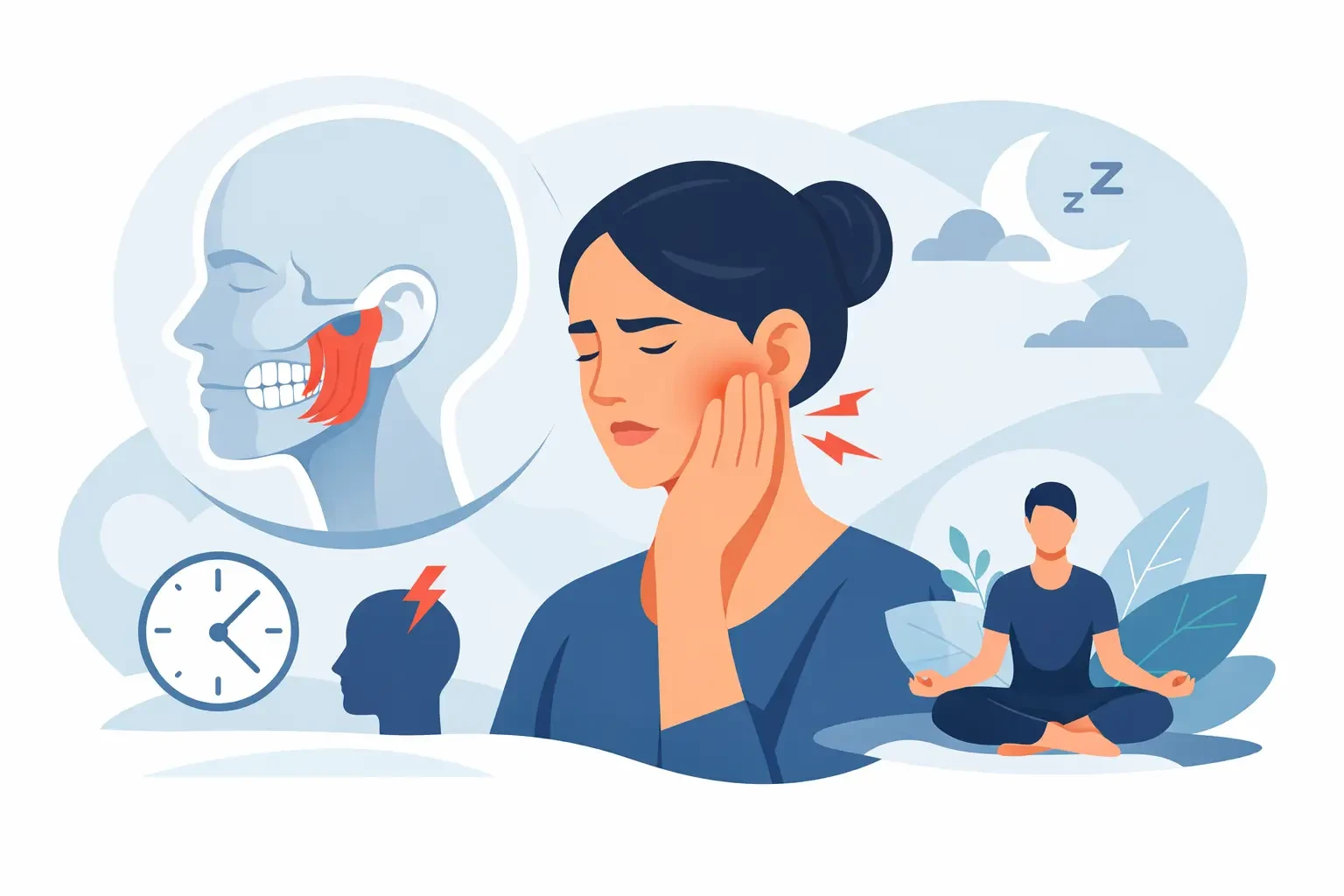
That tight, tired feeling around your cheeks, temples, or ears is easy to brush off until it starts stealing your focus during a meeting or making breakfast feel like a workout. Jaw tension is often more than a jaw issue. It can be your body’s very practical response to stress, posture, sleep habits, clenching, neck strain, or a bite that is asking for more support.
The good news: you do not have to simply live with a sore face and a headache that seems to pop up every afternoon. Understanding the patterns behind tension can help you choose gentle, effective next steps and give your jaw a little more room to relax.
What Jaw Tension Can Feel Like
Jaw tension does not look the same for everyone. Some people wake up with aching cheeks or a dull headache. Others notice clicking, popping, or stiffness when they yawn, chew, or try to open wide at the dentist. You may also feel tenderness near the joint in front of your ear, pressure in the temples, neck tightness, tooth sensitivity, or a persistent urge to stretch your face.
The jaw joint is called the temporomandibular joint, or TMJ. It works with a busy group of muscles in the face, head, and neck every time you speak, chew, swallow, or make that slightly chaotic expression when traffic is not cooperating. When those muscles stay switched on for too long, the whole area can feel overloaded.
Clicking alone is not always a problem, especially if there is no pain or limited movement. But pain, locking, a changing bite, or difficulty opening your mouth deserve a closer look from an appropriate health professional.
Why Jaw Tension Happens
A clenched jaw is rarely random. Often, several small factors pile up until your muscles decide they have had enough. Stress is a common piece of the picture. Many of us clench without realizing it while answering emails, lifting weights, driving, or concentrating. Nighttime grinding, also called bruxism, can keep the jaw working for hours while the rest of you is supposed to be recovering.
Your neck and posture matter, too. A forward-head position from laptop work, scrolling, or long commutes can change how the muscles around the jaw, throat, shoulders, and upper back share the load. If your neck is tight or your shoulders are living somewhere near your ears, your jaw may join the tension party.
Breathing habits can play a role as well. Mouth breathing, chronic congestion, or patterns that make it harder to rest with lips closed and the tongue supported at the roof of the mouth may affect the muscles of the face and jaw over time. This is one reason myofunctional therapy can be valuable for some people. It looks at how the tongue, lips, breathing, and swallowing patterns work together rather than focusing only on the sore spot.
There are also more direct contributors: chewing gum all day, frequent hard or crunchy foods during a flare, nail biting, leaning your chin into your hand, dental changes, or an injury to the face or neck. The answer is not always to blame your posture or your stress level. It depends on your symptoms, history, and what else your body is telling you.
Simple Ways to Ease Jaw Tension at Home
Start by noticing your resting jaw position. Your lips can be gently together, your teeth slightly apart, and your tongue resting softly on the roof of your mouth just behind the front teeth. Teeth do not need to touch when you are not eating. That tiny bit of space can be a lovely reminder for your nervous system to stand down.
Warmth often feels good for muscle-driven soreness. Try a warm, not hot, compress over the cheeks and temples for 10 to 15 minutes, then gently massage the cheek muscles with clean fingers. Keep pressure comfortable. The goal is not to dig into the area until it cries uncle.
For a few days during an active flare, choose softer foods and skip habits that ask a lot from the joint, such as gum chewing, biting ice, or taking enormous sandwich bites. This is not forever food restriction. It is simply a chance to reduce the workload while irritated tissues settle.
Slow breathing can also help because a tense jaw often travels with a revved-up nervous system. Try five relaxed breaths with one hand on your belly, allowing the exhale to be a little longer than the inhale. As you exhale, let your shoulders drop and check whether your teeth have quietly found each other again.
Be thoughtful with jaw stretches. Gentle, pain-free movement may feel relieving, but forceful stretching can aggravate an already sensitive joint. If opening your mouth is sharply painful, catches, or feels unstable, skip the DIY stretching and get individualized guidance.
A Whole-Body Approach to Jaw Tension
When jaw discomfort keeps returning, treating only the jaw can miss the bigger story. A personalized plan may consider spinal alignment, neck mobility, shoulder tension, breathing mechanics, sleep, daily stress load, and the habits that happen between appointments. The goal is not to chase every tight muscle. It is to help the body distribute movement and stress more comfortably.
At Align, care may combine approaches based on what your assessment shows. Gentle chiropractic care and physiotherapy can support mobility and address tension patterns through the neck, upper back, and shoulders. Acupuncture may be an option for muscle tension, stress support, and pain relief. Cupping can be used to help release tight soft tissue in appropriate areas, while myofunctional therapy may support healthier oral and facial muscle patterns when breathing, tongue posture, or swallowing habits are part of the concern.
These services are not interchangeable, and no single treatment is a magic wand. Someone whose jaw pain started after a dental procedure may need a different path than a person who clenches during stressful workweeks and has persistent neck stiffness. A thoughtful evaluation helps determine what fits, what should be referred out, and how to build habits that support results at home.
When to Get Professional Help
A little occasional tightness may improve with rest and habit changes. Ongoing or worsening symptoms are worth assessing, particularly if they affect eating, sleep, work, or exercise. Start with a dentist or physician when you suspect tooth damage, infection, bite changes, or sleep-related grinding. A custom night guard may be appropriate for some people, but it should be fitted and monitored by a dental professional rather than guessed at with an over-the-counter option.
Seek prompt medical or dental care if you have any of the following:
- Jaw locking or an inability to open or close your mouth normally
- Significant swelling, fever, redness, or severe tooth pain
- New numbness, facial weakness, or pain after an injury
- Sudden severe headache, chest pain, or symptoms that feel unusual for you
Jaw pain can occasionally overlap with other medical concerns, so it is always okay to take a new or alarming symptom seriously.
Your jaw does a lot of quiet work every day. Give it a little kindness: soften your teeth apart, let your shoulders come down, and pay attention to the patterns your body has been trying to share. Small, consistent shifts can make a surprisingly big difference in how you feel.
Find your next step at ALIGN
Our Frisco team can help you explore care that fits your needs. Request an appointment or explore our services.
This article provides general information and does not replace individualized medical advice.