Λ
Chronic Pain Needs a Bigger Plan
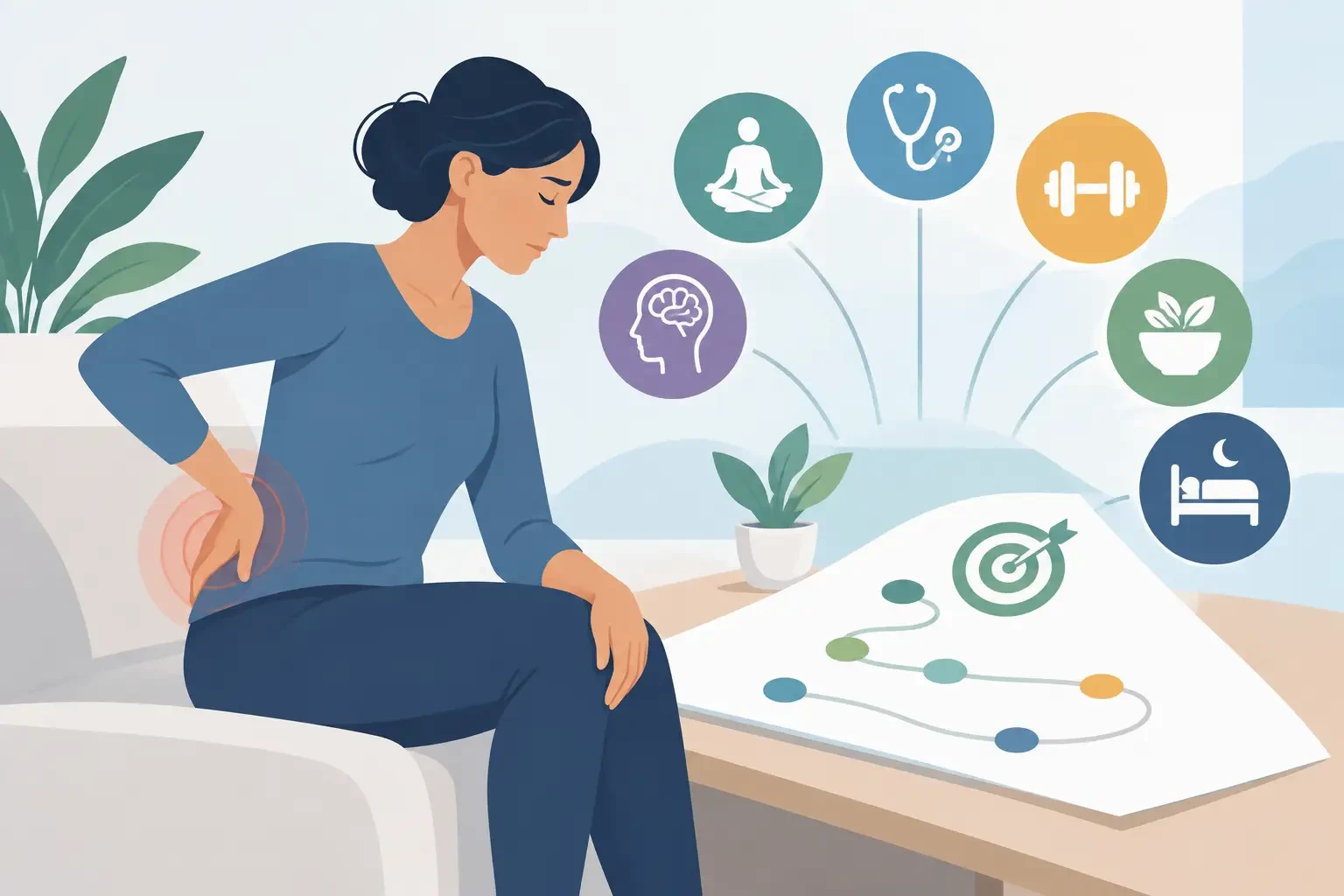
That ache in your low back that shows up after every long workday is rarely just about your low back. The neck tension that travels into your shoulders, the hip that feels tight on walks, and the sleep that never feels quite restorative can all become part of the chronic pain picture. When discomfort has been hanging around for months, your body is not being dramatic. It may be asking for a plan that looks beyond one sore spot.
Chronic pain can make everyday life feel smaller. You may stop playing pickleball, avoid lifting your toddler, skip workouts you once loved, or brace yourself before a long drive. The goal of supportive care is not to tell you to “push through.” It is to help you understand the patterns behind your discomfort and create more room to move, recover, and feel like yourself again.
What Chronic Pain Is Trying to Tell You
Chronic pain is generally pain that lasts longer than three months, though every person’s experience is different. It can follow an injury, surgery, repetitive strain, illness, or a period of high stress. Sometimes there is a clear starting point. Other times, it seems to build quietly through desk work, poor sleep, old movement habits, and a body that has been compensating for a little too long.
Pain is real, but it is also complex. Muscles, joints, nerves, inflammation, stress levels, sleep quality, and your nervous system can all influence how strongly your body experiences discomfort. That does not mean pain is “all in your head.” It means your body is wonderfully interconnected, and a meaningful care plan should respect that connection.
For example, recurring neck pain may involve more than the neck. Forward-head posture during computer work, jaw tension, shallow breathing, upper-back stiffness, and stress can all keep the area irritated. Similarly, low-back discomfort may be affected by hip mobility, core control, movement patterns, and how often you get up from your chair. No one needs another lecture about perfect posture. Your body needs practical support and a plan that fits real life.
Why a One-Spot Fix Can Fall Short
When pain flares, it is natural to focus on the loudest area. Ice, rest, stretching, or an occasional massage can absolutely feel good. But if the same issue keeps returning, temporary relief alone may not be enough.
A whole-body approach looks at what is creating extra demand on the painful area. Is one side of your body doing more work? Are tight muscles limiting a joint’s natural movement? Has an old injury changed the way you walk, train, or sit? Is stress keeping your shoulders lifted somewhere near your ears? These questions help shift care from chasing symptoms to supporting healthier function.
This is where integrated, non-surgical care can be especially valuable. Chiropractic care may help address spinal and joint mobility. Physiotherapy can support strength, stability, and safer movement patterns. Acupuncture may help some people manage pain, muscular tension, and stress responses. Cupping can be used to address areas of soft-tissue tightness and support recovery. Each service has a different role, and the best choice depends on your symptoms, health history, goals, and comfort level.
The magic is not in collecting treatments like wellness stickers. It is in coordinating them thoughtfully.
Building a Chronic Pain Plan That Feels Personal
A helpful chronic pain plan starts with listening. Before deciding what care makes sense, a provider should understand where and when you hurt, what makes symptoms better or worse, your past injuries, daily routines, exercise habits, sleep, and what you want to get back to doing.
Maybe your goal is to finish a workday without a headache. Maybe you want to get through a strength class without your knee complaining for two days. Maybe you simply want to sleep comfortably again. Those goals matter because they make care specific, measurable, and connected to your actual life.
Restore movement before demanding more from it
When a joint or muscle has been guarded for a long time, jumping straight into intense exercise can backfire. Gentle mobility work, hands-on care, and guided corrective movement may help your body move with less resistance first. From there, strength and endurance can be built gradually.
This does not mean avoiding movement forever. In many cases, appropriate movement is part of recovery. The key word is appropriate. A plan for an active runner will look different from a plan for a parent who spends hours at a desk, and both deserve care that meets them where they are.
Help the nervous system come out of high alert
Persistent pain can make the nervous system more protective. You might notice that small movements feel threatening, muscles stay tense, or a stressful week makes old symptoms flare. Calming the system is not a fluffy add-on. It can be part of helping the body feel safe enough to move and recover.
Breathing practices, restorative sleep habits, realistic activity pacing, acupuncture, and hands-on therapies may all have a place here. The goal is not perfection or a totally stress-free life, because hello, real life. It is creating more moments where your body is not stuck in go-go-go mode.
Make daily habits work for you
The little things can become big things when they happen every day. Your workstation setup, footwear, training schedule, car time, hydration, sleep position, and recovery between workouts can all affect how your body feels.
Lifestyle guidance should be doable, not a 37-step routine that lasts until Tuesday. Sometimes the right change is standing up for two minutes every hour. Sometimes it is adjusting how you lift, adding a recovery day, or choosing a pillow that better supports your neck. Sustainable changes usually beat dramatic overhauls.
What Progress Can Look Like
Pain relief is a meaningful goal, but progress is not always a straight line. You may notice that you recover more quickly after activity, can turn your head farther, wake up less stiff, or feel more confident taking a walk. These wins count.
Some conditions improve quickly, while others require steady corrective care and patience. Factors like the length of time you have had symptoms, the nature of an injury, work demands, stress, and underlying health conditions can affect the pace. A good provider will be honest about those trade-offs and adjust your plan based on your response.
At Align, care is designed around that whole-person view: alignment, mobility, soft-tissue tension, recovery, and the everyday habits that influence them. Rather than treating chiropractic, acupuncture, cupping, and physiotherapy as separate menu items, they can be thoughtfully combined around your goals.
When Pain Needs Medical Attention First
Holistic and supportive care can be a wonderful part of a pain-management plan, but not every symptom should be managed in a wellness setting. Seek prompt medical evaluation for severe or sudden pain after a major injury, new weakness, numbness that is worsening, loss of bowel or bladder control, unexplained fever, chest pain, trouble breathing, unexplained weight loss, or pain that is rapidly getting worse.
It is also wise to involve your physician when pain is new, persistent, medically complex, or affecting your ability to function. Integrative care works best when it complements appropriate medical evaluation, not when it replaces it.
You do not have to earn relief by tolerating pain until it becomes unbearable. Start with one curious question: what would feel easier if your body had a little more support this week? That answer can be a gentle, powerful place to begin.
Find your next step at ALIGN
Our Frisco team can help you explore care that fits your needs. Request an appointment or explore our services.
This article provides general information and does not replace individualized medical advice.
← Back to all articles