Λ
How to Improve Spinal Mobility Without Forcing It
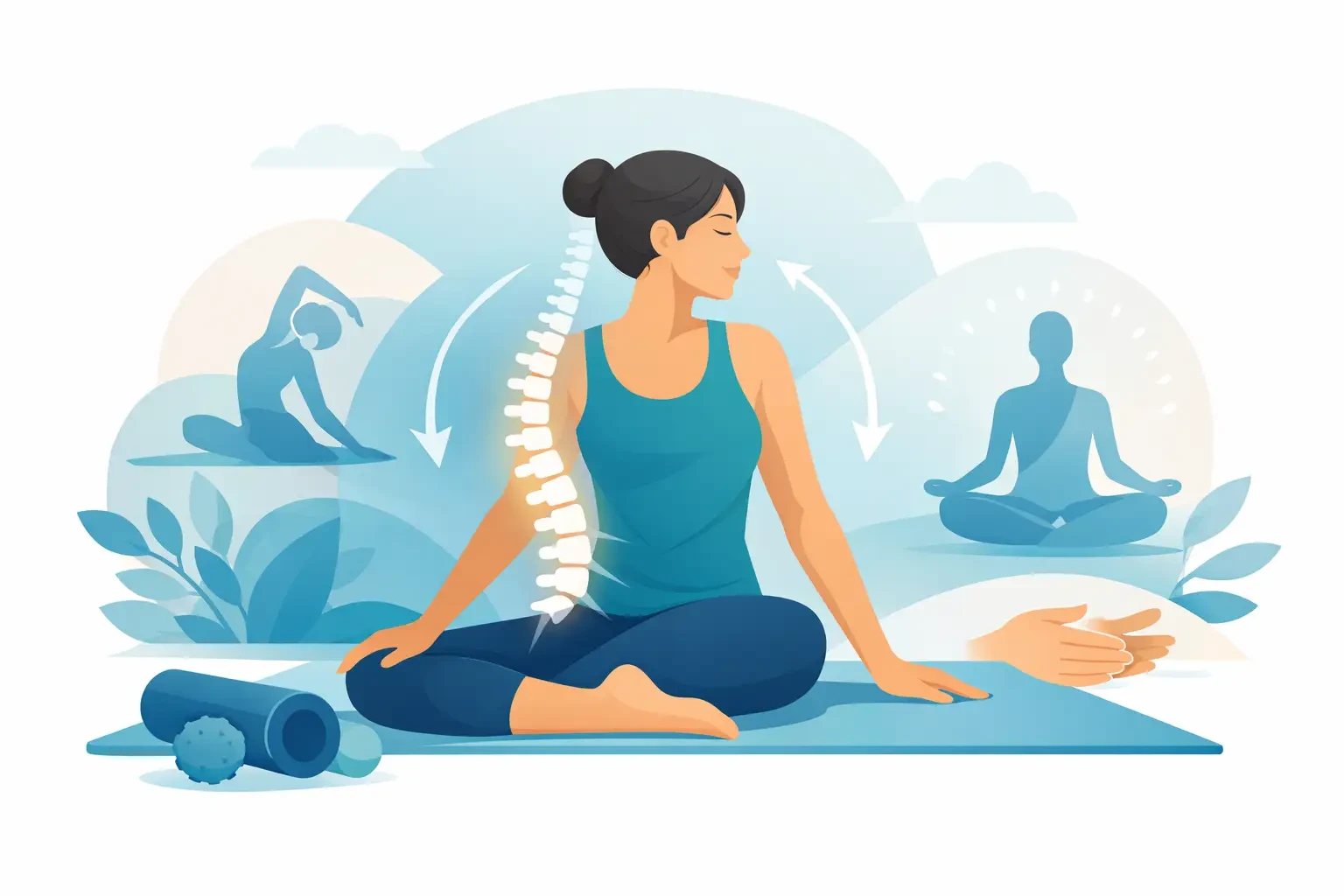
Your spine is meant to move. It bends to pick up a toddler, rotates to check a blind spot, extends when you reach for a top shelf, and quietly absorbs the demands of a long workday. When those movements start to feel stiff, pinchy, or limited, learning how to improve spinal mobility is less about pushing harder and more about giving your body the right kind of support.
A tight back is rarely just a back problem. Hours at a desk, stress-held shoulders, shallow breathing, old injuries, sleep position, hip tightness, and a workout routine that skips recovery can all change the way your spine moves. The good news: consistent, gentle care can help your body feel more fluid, capable, and at home in motion.
What spinal mobility really means
Spinal mobility is your ability to move through your spine's available range of motion with control and comfort. That includes flexion, like rounding forward; extension, like reaching overhead; side bending; and rotation. Your neck, mid-back, and low back each contribute differently, so the goal is not to make every segment bend in every direction equally.
For example, the mid-back is designed for more rotation than the low back. If your thoracic spine is stiff after hours of hunching over a laptop, your lower back may try to create that rotation instead. That can leave you feeling achy or tight, even if the low back itself is not the original issue.
Mobility is also different from flexibility. Flexibility describes how far a muscle can lengthen. Mobility includes flexibility, strength, joint motion, coordination, and nervous-system comfort. You do not need to become a human pretzel to move better. You need movement your body can trust.
How to improve spinal mobility with daily movement
The most effective mobility routine is usually the one you can repeat without turning it into another item on your stress list. A few intentional minutes most days often beats one ambitious stretching session on Sunday.
Start by changing positions more often
Your body does not need a perfect posture held all day. It needs variety. Even a wonderfully ergonomic desk setup cannot replace regular movement breaks.
If you work at a computer, stand up every 30 to 60 minutes. Walk to refill your water, roll your shoulders, gently turn your head side to side, or take a few slow breaths with your arms overhead. These small resets keep one position from becoming your body's default setting.
For parents, frequent position changes may look like switching the hip you carry your child on, using both sides when loading groceries, or taking a brief walk after school pickup. Tiny adjustments count. Your spine loves a little variety.
Use slow, controlled mobility drills
Fast, forced twisting is not the goal. Choose movements that feel smooth and stay below the point of sharp pain. Breathe normally while you move, because breath-holding can signal your nervous system to brace.
A simple sequence can include cat-cow, gentle seated or standing thoracic rotations, child's pose with a side reach, and a supported chest-opening stretch. If your neck feels stiff, try slow chin tucks and easy head turns rather than big circles. For the low back, pelvic tilts and controlled knee-to-chest movements can feel restorative for some people.
Start with five to eight repetitions per side, moving slowly enough to notice where you feel restriction. You are not trying to win the stretch. You are teaching your body that motion can be safe again.
Pair mobility with strength
Stretching may create short-term relief, but lasting mobility usually needs strength behind it. Your core, glutes, upper back, and hips help your spine move without asking one area to do all the work.
Think of strength as your mobility's supportive best friend. Exercises such as bridges, bird dogs, rows, wall slides, and bodyweight squats can build control around the spine when performed with good form. The right choices depend on your history, current symptoms, and goals, especially after an injury or during a pain flare.
Pay attention to the habits that create tension
Your daily routine can either support your mobility work or quietly undo it. This is not about being perfect. It is about noticing patterns.
Stress is a big one. When you are under pressure, your jaw may clench, shoulders may creep upward, and breathing may become shallow. That protective tension can make the neck and upper back feel locked up. A few minutes of slow diaphragmatic breathing, a walk outside, or a calming recovery practice can reduce the urge to brace all day.
Sleep matters, too. If you wake up stiff every morning, take a look at your pillow, mattress support, and usual sleeping position. Side sleepers may benefit from a pillow between the knees, while back sleepers often feel better with a pillow that supports the natural curve of the neck without pushing the head too far forward.
Your training routine deserves an honest look as well. High-intensity workouts, golf, pickleball, running, and strength training can all support spinal health, but only when recovery is part of the plan. If you are loading the same tissues repeatedly without enough rest, hydration, fueling, or mobility work, your body may eventually ask for a timeout.
When tightness is not a cue to stretch harder
There is a difference between ordinary stiffness and pain that needs a closer look. Stop and seek medical evaluation promptly if back or neck pain follows a major fall or accident, or if you have numbness, weakness, loss of coordination, changes in bowel or bladder control, fever, unexplained weight loss, or pain that is severe and worsening.
Even without red flags, recurring stiffness deserves attention when it interferes with sleep, work, exercise, or the activities you love. Sometimes the issue is not a lack of effort. It may be poor movement compensation, irritated tissue, joint restriction, muscle guarding, or an old injury that has never fully been addressed.
This is where personalized care can make a meaningful difference. Chiropractic care may help restore comfortable joint motion and address alignment patterns. Physiotherapy can build strength and movement control around areas that feel vulnerable. Acupuncture and cupping may help calm muscular tension and support recovery for people who hold stress in their neck, shoulders, or back. No single approach is magic, and the best plan depends on what your body is doing right now.
A more personalized path to better movement
If you have tried random stretches from social media and still feel stuck, you are not failing. Your body may simply need a plan that connects the dots between mobility, strength, stress, recovery, and daily habits.
At Align, that can mean combining hands-on care with practical movement guidance rather than treating a stiff neck, low-back tension, and post-workout soreness as separate problems. The intention is to help you feel better in the moment while building habits that make movement more sustainable outside the treatment room.
Progress is not always dramatic. It might look like turning your head more easily while driving, getting off the floor without bracing, finishing a workday with less shoulder tension, or returning to a favorite workout with more confidence. Those are real wins, and they tend to add up.
Give your spine frequent, gentle reasons to move, then listen to what it tells you. A little consistency, thoughtful recovery, and care tailored to your body can make everyday movement feel lighter again.
Find your next step at ALIGN
Our Frisco team can help you explore care that fits your needs. Request an appointment or explore our services.
This article provides general information and does not replace individualized medical advice.
← Back to all articles