Λ
Physiotherapy Versus Chiropractic Treatment
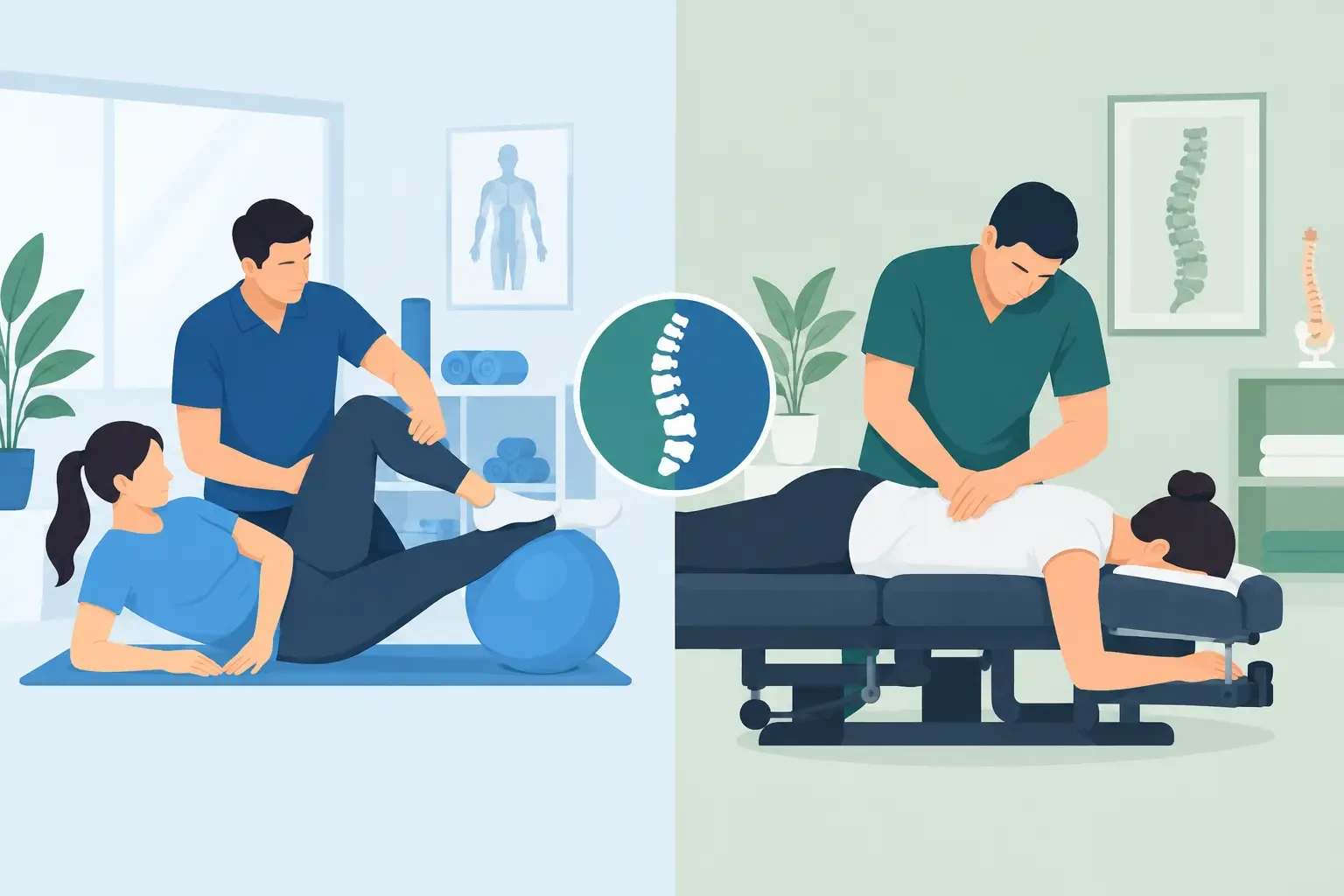
That stiff neck after a laptop-heavy week, the low-back ache that appears during carpool, the knee that complains halfway through a workout - these problems rarely live in just one place. They can involve movement habits, muscle tension, joint mechanics, stress, sleep, and the way your body has learned to compensate. That is why choosing between physiotherapy versus chiropractic treatment is less about picking a winner and more about finding the kind of support your body needs right now.
Both approaches can be valuable for pain relief, mobility, recovery, and long-term function. They simply tend to enter the picture from different directions. One may help restore movement through guided exercise and rehabilitation; the other may focus on spinal and joint motion, nervous-system support, and hands-on adjustment. For many people, the most helpful plan includes thoughtful elements of both.
Physiotherapy versus chiropractic treatment: the core difference
Physiotherapy, often called physical therapy, is centered on helping the body move, heal, and function more comfortably. A physiotherapist evaluates how you move, where you are weak or guarded, and what may be limiting your range of motion. Treatment often includes therapeutic exercise, mobility work, soft-tissue techniques, posture education, balance training, and practical guidance for returning to daily activities or sport.
Chiropractic care primarily focuses on the relationship between the spine, joints, muscles, and nervous system. A chiropractor may use spinal or joint adjustments, manual therapy, mobility work, and corrective recommendations to improve joint motion and ease irritation caused by restriction, posture, repetitive stress, or compensation patterns. Care can also include exercise and lifestyle guidance, depending on the provider and your plan.
Put simply, physiotherapy often emphasizes rebuilding capacity through progressive movement. Chiropractic treatment often emphasizes improving alignment and joint function through skilled hands-on care. The overlap is real: both may address mobility, soft tissue, posture, and movement habits. The difference is usually one of emphasis, not an either-or line drawn in permanent marker.
When physiotherapy may be the better starting point
Physiotherapy can be especially useful when an injury, surgery, prolonged pain episode, or period of inactivity has left you feeling less stable or confident in your body. Maybe you can walk without much trouble but squatting feels shaky. Maybe your shoulder no longer hurts at rest, yet lifting a suitcase still feels weak. Those are moments when a structured rehabilitation plan can be a very good fit.
A physiotherapy plan commonly helps with issues such as recurring muscle strains, tendon irritation, joint instability, post-surgical recovery, sports-related injuries, balance concerns, and gradual return to activity. The work is active by design. You may receive hands-on treatment during an appointment, but the lasting progress often comes from the movements, strengthening, and habits you practice between visits.
That does not mean every session needs to feel like a boot camp. Good rehabilitation meets you where you are. If pain has made you hesitant to move, the goal is not to push through everything. It is to reintroduce movement in a way that feels supported, appropriately challenging, and sustainable.
What a physiotherapy-focused visit can feel like
Expect questions about what makes symptoms better or worse, what your typical day looks like, and what you want to get back to doing. Your care may include an assessment of mobility, strength, gait, balance, and movement patterns. From there, treatment can blend targeted manual work with exercises that make daily life easier - reaching overhead, climbing stairs, picking up your child, returning to Pilates, or finishing a workout without your body staging a protest the next morning.
When chiropractic care may be the better starting point
Chiropractic care may be a natural fit when stiffness, restricted motion, postural strain, or spinal discomfort is a major part of the picture. Many people seek it after waking up unable to turn their head comfortably, dealing with low-back tightness after long drives, or noticing that stress seems to settle permanently between their shoulders.
An adjustment is not about forcing the body into perfection. It is a precise technique intended to improve motion in a joint that may not be moving well. For some people, restoring that motion can reduce the sense of tightness and help the surrounding muscles stop working overtime. A chiropractor may also use soft-tissue work, stretching, mobility recommendations, and simple at-home strategies to support the changes made in the treatment room.
Chiropractic care can be particularly helpful when you want hands-on support for neck or back discomfort, joint restriction, headaches associated with neck tension, posture-related aches, or general stiffness that affects how you move. It can also be a useful part of a maintenance routine for people whose work, training, or family life repeatedly asks a lot of their bodies.
What chiropractic treatment does not replace
Hands-on care can create meaningful relief, but a joint adjustment alone does not automatically solve a movement pattern, an under-conditioned muscle group, or a workstation that asks your body to hunch for eight hours a day. That is where a more complete plan matters. The best care does not just chase the loudest symptom. It looks at why the same irritation keeps returning.
Why the best answer is sometimes both
A body in pain is often a body adapting. If your low back feels tight, your hips may be moving less. If your hips move less, your knees or upper back may take on extra work. If stress and poor sleep are also present, your muscles may stay guarded long after the original trigger has passed. Cute? No. Common? Very.
This is where integrated care can shine. Chiropractic treatment may help improve spinal or joint mobility and make movement feel more available. Physiotherapy can then build strength, control, and confidence in that new range of motion. Acupuncture or cupping may be considered when muscle tension and recovery need extra support. Lifestyle planning can address the small daily patterns that keep feeding the problem.
For example, a recreational runner with hip tightness and low-back discomfort may benefit from chiropractic care to address restricted motion, then physiotherapy-guided exercises to improve hip strength, running mechanics, and load tolerance. A busy professional with neck tension may find relief through adjustment and soft-tissue care while also learning mobility breaks and upper-back strengthening that make desk days less punishing.
The right combination depends on your history, goals, preferences, and what your body tolerates well. Some people want a short-term reset before returning to a training plan. Others need a gradual corrective-care approach after years of compensation. Neither is a failure of willpower. Bodies are wonderfully adaptable, but they appreciate a little consistency.
How to choose the right care for your goals
Start with the outcome you care about most. If you want to rebuild strength, recover from an injury, improve stability, or return to a specific activity, physiotherapy may deserve a central role. If restricted spinal or joint motion, posture-related tension, or recurring neck and back stiffness are leading concerns, chiropractic care may be a strong starting point.
Then consider your participation style. Physiotherapy usually asks for regular at-home movement and progressive exercise. Chiropractic care can feel more immediately hands-on, though the strongest results still come when treatment is paired with movement, ergonomics, hydration, sleep, and recovery habits. A personalized plan should make room for your real life, not ask you to suddenly become someone who owns color-coded resistance bands and wakes up at 5 a.m.
It also helps to choose a provider who listens carefully and explains the why behind recommendations. You should understand what is being treated, what progress may look like, how frequently care is recommended, and what you can do between sessions. If your symptoms change, your plan should be able to change too.
When to seek medical evaluation first
Not every pain concern belongs in a wellness setting first. Seek prompt medical evaluation for severe or worsening pain after a major accident, sudden weakness, loss of bladder or bowel control, numbness in the groin area, unexplained fever, unexplained weight loss, chest pain, or shortness of breath. New symptoms that are intense, unusual, or rapidly progressing deserve medical attention.
For more common aches, stiffness, and movement limitations, an individualized assessment can help clarify the next step. At Align, care can bring chiropractic support, physiotherapy-minded movement work, recovery modalities, and lifestyle guidance into one thoughtful plan - because feeling better is lovely, and moving through life with more ease is even better.
Your body does not need a lecture for being sore. It needs curious care, a clear plan, and enough support to make the next walk, workout, workday, or deep breath feel a little more like you.
Find your next step at ALIGN
Our Frisco team can help you explore care that fits your needs. Request an appointment or explore our services.
This article provides general information and does not replace individualized medical advice.
← Back to all articles