Λ
What Causes Tech Neck Pain and How It Builds
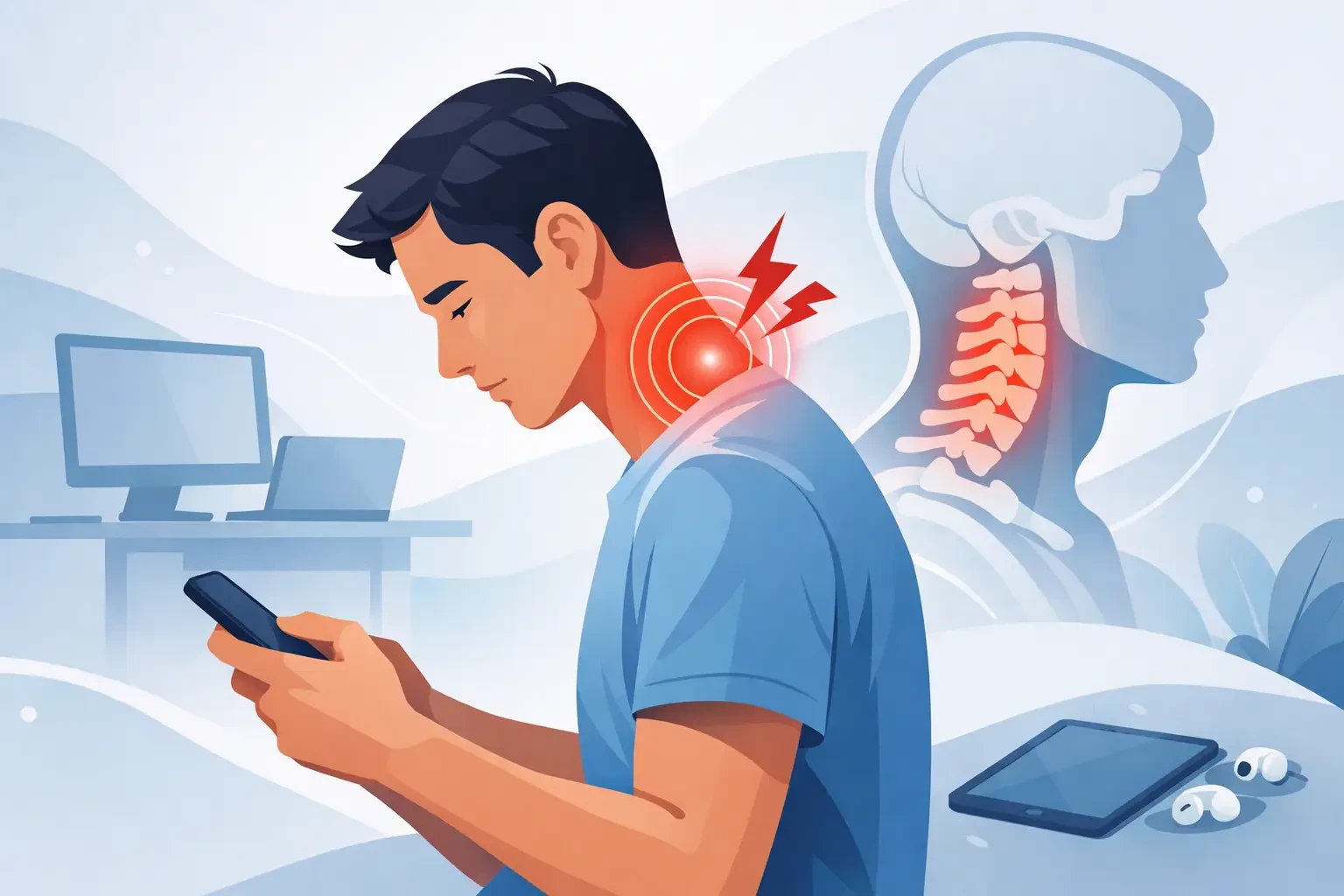
Your neck is not built to hold your head in a forward tilt for hours while you answer emails, scroll between meetings, or check one more text from the carpool line. Yet that is exactly the position many of us repeat all day. What causes tech neck pain is rarely just your phone. It is the accumulated effect of posture, muscle fatigue, screen habits, stress, and the way your body adapts when movement gets pushed aside.
The good news? Tech neck is not a personal failure or a sign that you need to swear off technology forever. It is your body asking for a little more support, variety, and alignment.
What Causes Tech Neck Pain?
Tech neck is a common name for neck, shoulder, and upper-back discomfort connected to prolonged screen use. When you look down at a device or lean your head toward a laptop, your head shifts forward from its more balanced position over the spine. The farther forward it travels, the harder the muscles, joints, and connective tissues in your neck and upper back have to work.
Your head is not especially heavy when it is stacked comfortably over your shoulders. But a small forward tilt changes the load dramatically. The muscles along the back of the neck often tighten to keep your head from dropping farther, while the muscles at the front of the neck can become less effective at providing support. Over time, that uneven effort can feel like a deep ache at the base of the skull, burning across the shoulders, stiffness when turning your head, or tension headaches that show up right on schedule after a long workday.
It is usually not one bad posture that creates the problem. Bodies are wonderfully adaptable, but they also keep score. Hours in one position, repeated day after day, ask a lot from the same tissues.
The Everyday Habits That Add Up
Looking down is only part of the story
Phones are an obvious culprit because they tend to live below eye level. But laptops, tablets, gaming setups, reading in bed, and even cooking while following a recipe on a counter-level screen can create a similar head-forward position. If you work from home, a dining chair and laptop may be doing their best, but they are not always a match for your neck.
Laptop use can be especially sneaky. People often raise the screen but then have to reach upward for the keyboard, or they keep the keyboard comfortable but leave the screen too low. Either setup may encourage shoulder tension or neck flexion. Small ergonomic changes matter, but they work best when paired with regular movement.
Stillness makes strain louder
A perfectly arranged workstation is not a magic force field. Even a good posture becomes tiring if you hold it for too long. Muscles need changing demands, circulation, and moments to relax. When you stay frozen in a focused work position for 45 minutes, your shoulders may slowly creep toward your ears and your chin may inch forward without you noticing.
This is why the answer is not to sit rigidly upright all day. Think of posture as a moving target, not a pose you have to perform. The most supportive position is often the next reasonably comfortable position.
Stress lands in the neck and shoulders
Deadlines, family logistics, poor sleep, and a nervous system stuck in high alert can make tech neck feel much more intense. Many people brace through the jaw, neck, and upper traps when they are stressed. Add screen time to that tension pattern, and the muscles may never get a real reset.
Stress does not mean your pain is imaginary. It means your nervous system can influence how tightly muscles hold and how strongly you experience discomfort. Addressing both the physical strain and the stress response often creates more lasting relief than treating either one alone.
Weak or underused support muscles can contribute
Your neck does not work alone. It depends on support from the upper back, shoulder blades, chest, core, and deep neck muscles. When daily life involves lots of sitting and very little pulling, carrying, reaching, or strength work, those supporting muscles may not have the endurance needed for long desk days.
Tight chest muscles can also pull the shoulders forward, making it easier for the head to follow. Limited mobility in the upper back can force the neck to compensate for movements that should be shared across several areas. That is why a sore neck sometimes benefits from attention well beyond the neck itself.
Why Tech Neck Can Feel Different From Person to Person
Two people can use the same phone for the same number of hours and have very different symptoms. Previous injuries, arthritis, sleep position, stress level, fitness habits, vision changes, and workstation setup all affect the picture. A parent carrying a toddler on one hip may have a different pattern from a cyclist who spends weekends in a forward riding posture, even if both work at a computer.
Pain may also spread. Irritated tissues around the neck and shoulders can refer discomfort into the upper back, head, jaw, or arms. Some people notice reduced range of motion first. Others notice headaches, tingling, or a cranky shoulder blade that feels like it has a permanent knot. The pattern matters, which is why personalized care is more useful than a generic posture lecture.
Small Changes That Give Your Neck a Better Day
Start by bringing frequently used screens closer to eye level. A monitor should generally sit in front of you rather than off to one side, and a laptop often works better with a separate keyboard and mouse when used for extended periods. For phone use, lift the device closer to your face when practical instead of dropping your head toward it.
Then build mini movement breaks into your routine. Every 30 to 60 minutes, stand up, walk for a minute, roll your shoulders, gently turn your head side to side, or reach your arms overhead. The goal is not a flawless exercise routine between every email. It is interrupting the long, low-level strain before it becomes your default setting.
Gentle strengthening can be helpful, too, especially for the upper back, shoulder blade stabilizers, and deep neck flexors. But more exercise is not always better. If a movement causes sharp pain, worsening symptoms, or tingling, stop and get guidance. Stretching an already irritated area aggressively can make a grumpy neck even grumpier.
Sleep deserves a quick mention here. A pillow that leaves your neck sharply bent up, down, or sideways can make it harder to recover overnight. There is no single perfect pillow for everyone, but your neck should feel reasonably supported and neutral whether you sleep on your side or back.
When Tech Neck Needs More Than a Desk Adjustment
Persistent pain is worth a closer look, particularly if it keeps returning despite changes to your routine. Chiropractic care may help assess spinal and joint movement, while physiotherapy can support mobility, strength, and better movement patterns. Acupuncture and cupping may be useful options for some people dealing with muscular tension, stress-related holding, or recovery needs.
At Align, care can bring these pieces together rather than treating the sore spot as the whole story. Your screen habits, work setup, mobility, stress load, and movement goals all help shape a plan that feels realistic for your actual life, not an imaginary one with no meetings and unlimited free time.
Seek prompt medical evaluation for neck pain after a fall, accident, or other trauma. The same is true for new or worsening arm weakness, numbness or tingling that does not ease, loss of coordination, severe headache, fever, unexplained weight loss, or changes in bowel or bladder control. Those symptoms need medical attention, not another round of shoulder rolls.
Your technology is probably not going anywhere, and it does not have to. Give your neck more moments of movement, better support, and care that looks at the whole pattern. A little alignment in your day can make looking up feel a whole lot easier.
Find your next step at ALIGN
Our Frisco team can help you explore care that fits your needs. Request an appointment or explore our services.
This article provides general information and does not replace individualized medical advice.
← Back to all articles